Define
Material, thickness, geometry, volume, downstream operation and acceptance method.
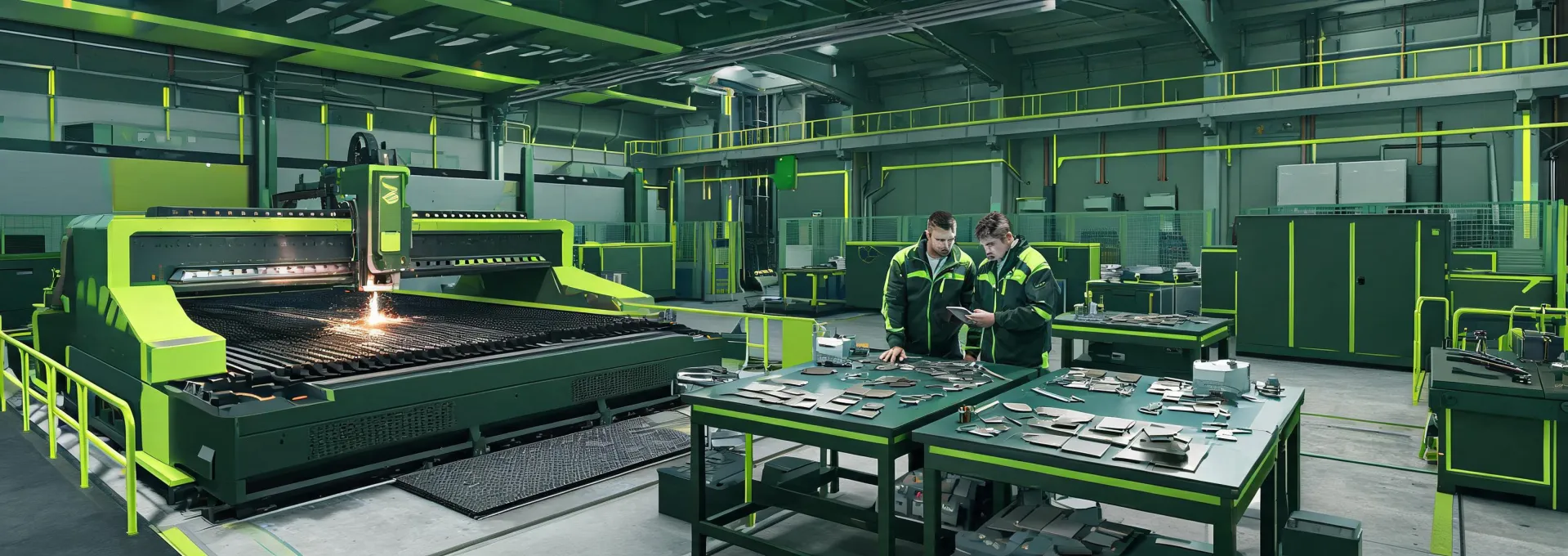
Hypertherm is presented here through the work that makes industrial cutting decisions defensible: defining the application, testing the process, documenting the boundary and giving operators a record they can use after the engineering team leaves the cell.
The roadmap is intentionally procedural. It does not treat a power-source rating as proof of the finished edge. Every step assigns an owner, a measurement and a stop condition. That makes changes visible when the plate, consumable, utility or software environment moves outside the validated setup.
Four gates organize the work. Application definition identifies the edge or joint requirement. Process selection chooses the method and consumable family. Cell integration tests control and motion behavior. Production evidence captures the coupon, settings and inspection record. A site may enter the roadmap at any gate, but unresolved inputs travel forward as explicit risks rather than disappearing in a proposal.
Material, thickness, geometry, volume, downstream operation and acceptance method.
Process family, current range, consumable set, gas or air path and pierce strategy.
CNC signals, torch-height response, table motion, extraction and fault ownership.
Labeled coupon, edge observations, recorded settings and operator restart checks.
This restrained timeline avoids unsupported scale claims. It marks how plasma-system work has expanded from controlling the arc to coordinating consumables, digital settings and the complete cutting cell.
The company history begins in 1968, establishing a long reference point for plasma-process development. The date is useful context, not proof that a current configuration fits a specific shop.
Operator control, work-lead condition, consumable inspection and compressed-air quality become central to repeatable field cutting and gouging.
Cut quality depends increasingly on motion, torch height, pierce routines, controller timing and extraction alongside the power source.
Digital selection aids and system feedback can reduce setup ambiguity, while the actual plate and machine remain the required verification environment.
Retained coupons, inspection criteria and event records link engineering intent to operator decisions during production and maintenance.
These roles represent the partners needed to make a cutting cell work. No customer logo or certification seal is implied. Each role owns evidence that another role cannot manufacture after the fact.
Own program execution, signal sequence, motion commands and the operator interface used to recover from a stopped cycle.
Own initial height, transfer response, arc-voltage control and the mechanical condition that keeps the torch aligned.
Own rigidity, acceleration behavior, cable routing, guarding, extraction interfaces and documented electrical integration.
Own material traceability, consumable handling, shift checks, acceptance samples and escalation when the result trends away.
Define the measurable edge or part criteria and preserve inspection consistency across material lots and operators.
Own fume, noise, ultraviolet exposure, compressed gas, electrical and machine-guarding controls under local requirements.
Send the application conditions, current cell architecture and acceptance method. The first response can then identify missing measurements, a safe diagnostic route and whether a controlled trial is justified.
Contact the Application Desk